
Get help

Help center

Guides and answers

Contact support

Write to our team

Sign in to

Workflows

Build processes with your team

Automations

Connect files and automate tasks

One system, four parts

AI agents

Virtual Employees that work 24/7

Automations

Connect files and automate tasks

Workflows

Build processes with your team

Data Space

Trusted data sharing and control

Solutions by department

Finance

Reports, budgets, and reconciliations

Inventory and manufacturing

Stock, orders, and production in one view

HR

Timesheets, attendance, and reviews

Project management

Status and workload across projects

Sales and CRM

Leads and deals kept up to date

Education

Student records and school data

Finance

Turn manual finance work into reports that update themselves.

What Finance teams automate

  • Track payables and receivables
  • Build cash flow statements
  • Compare budget against actuals

Inventory and manufacturing

See stock levels and automate ordering.

What inventory and manufacturing teams automate

  • Track inventory across multiple sites
  • Connect sales, purchasing, and warehouse data
  • Link a barcode scanner to your sheet

HR

Run recruitment, attendance, and OKR tracking from your sheets.

What HR teams automate

  • Track recruitment and onboarding
  • Record team OKRs and results
  • Track check-ins, check-outs, and leave

Project management

Assign tasks and track hours without manual updates.

What project teams automate

  • Assign tasks and track status changes
  • Estimate effort and log hours worked
  • Track milestones across projects

Sales and CRM

Track leads and sales performance with automated reports.

What sales teams automate

  • Track and convert leads
  • Set sales goals and track team metrics
  • Monitor sales KPIs on dashboards

Education

Automate attendance, grades, and school purchasing.

What schools automate

  • Track attendance and notify parents
  • Record and compare class grades
  • Track inventory lent to students and staff

Find a use case

By department

How each team uses Sheetgo

By industry

How each industry uses Sheetgo

By company size

Small, medium-sized, or large

Learn

Blog

Guides and product news

Customer stories

How teams like yours use Sheetgo

Help center

Guides and answers

Why Sheetgo

Compare

How Sheetgo compares with other tools

Security

How we protect your data

Trust center

Our compliance details

Sign in to

Workflows

Build processes with your team

Automations

Connect files and automate tasks

One system, four parts

AI agents

Virtual Employees that work 24/7

Automations

Connect files and automate tasks

Workflows

Build processes with your team

Data Space

Trusted data sharing and control

Solutions by department

Finance

Reports, budgets, and reconciliations

Inventory and manufacturing

Stock, orders, and production in one view

HR

Timesheets, attendance, and reviews

Project management

Status and workload across projects

Sales and CRM

Leads and deals kept up to date

Education

Student records and school data

Find a use case

By department

How each team uses Sheetgo

By industry

How each industry uses Sheetgo

By company size

Small, medium-sized, or large

Get started

Templates

Ready-made workflows to start from

Learn

Blog

Guides and product news

Customer stories

How teams like yours use Sheetgo

Help center

Guides and answers

Why Sheetgo

Compare

How Sheetgo compares with other tools

Security

How we protect your data

Trust center

Our compliance details

Help center

Guides and answers

Contact support

Write to our team

Workflows

Build processes with your team

Automations

Connect files and automate tasks

How to share Google Sheets (complete guide)

Google Drive represented the first user-friendly and free file storage system. This platform continues to add features to make it super easy to share and collaborate on the same document simultaneously. If spreadsheets represent the go-to document type for your team, then you’ll find the sharing and collaboration features in Google Sheets the most useful alternative.

For example, Google Sheets allows you to share only one tab rather than the entire spreadsheet. You can also configure your Google Sheets permissions to restrict specific users from viewing, editing, or commenting. In this complete guide, you’ll learn how to make a Google Sheet public and how to create a Google Sheet to share with everyone. Additionally, you’ll find practical examples of how to share Google Sheets with all the available options; using links, via email, and depending on how many users you wish to grant access to.
How to share Google Sheets?

Many users choose Google Sheets as their preferred tool for online, simultaneous collaboration. Why? For the majority of cases, you simply need to click on the “Share” button.

However, it’s not always the case that you’ll share for collaborative purposes, so it’s important to understand the different sharing options in Google Sheets.

Google Sheets sharing options

There are two ways to share your Google Sheets:

1. Via a shareable link.

2. Adding user emails.

Since the second option will require further steps, let’s first see how to share your Google Sheet via a shareable link.

How to share your Google Sheet by getting the link?

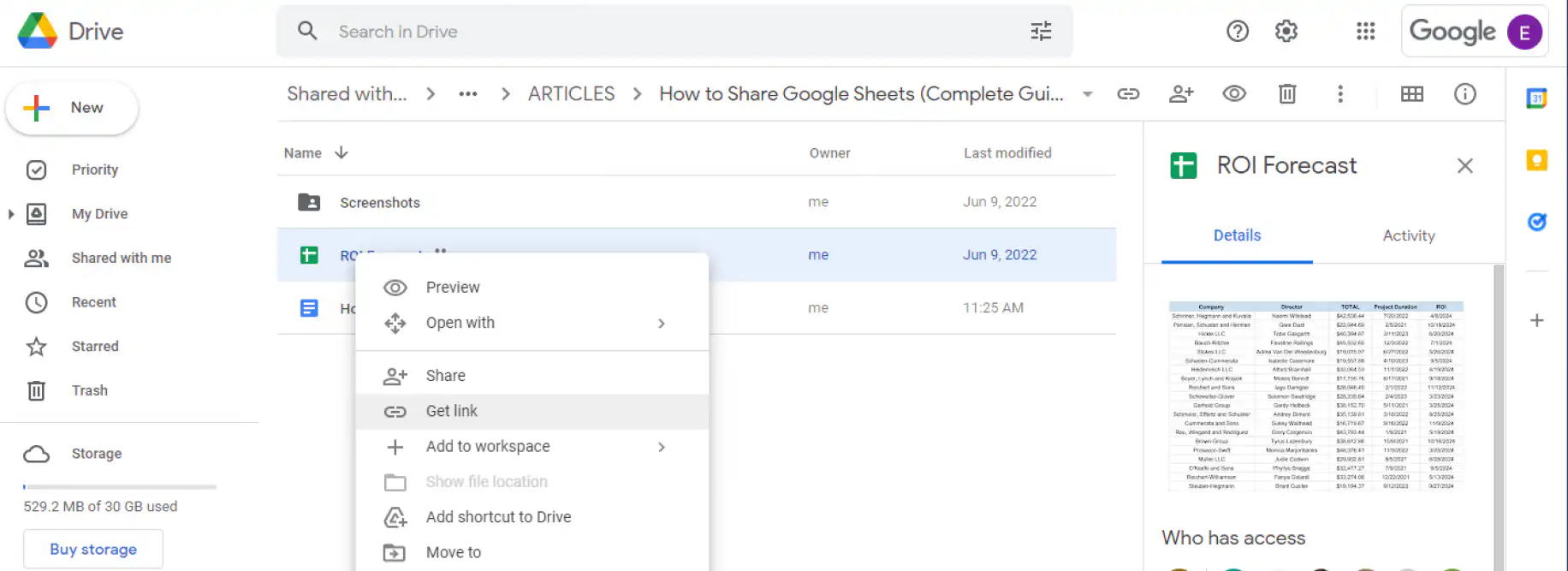
1. Go to your Google Drive and right-click on the Google Sheets you’d like to share. Select “Get link” from the drop-down menu.

How to share Google Sheets — Google Drive right-click menu with Share and Get link

2. Alternatively, you can click on the “Share” button placed in the top-right corner.
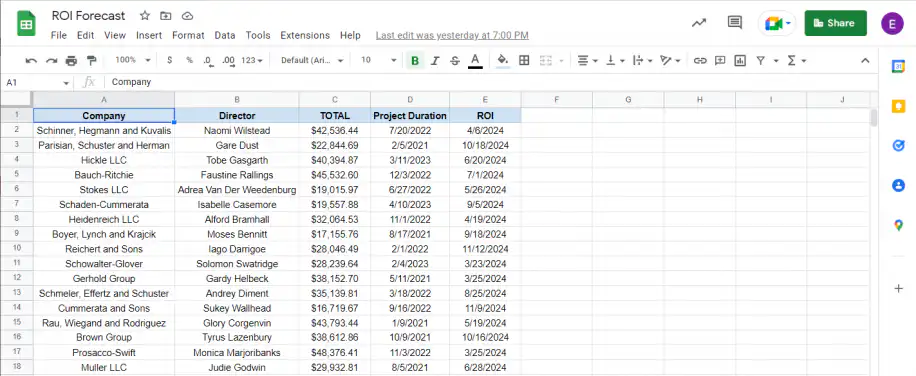
Share Google Sheets — green Share button at the top right of the spreadsheet

3. Go to the “Get link” box and click on “Copy link”.
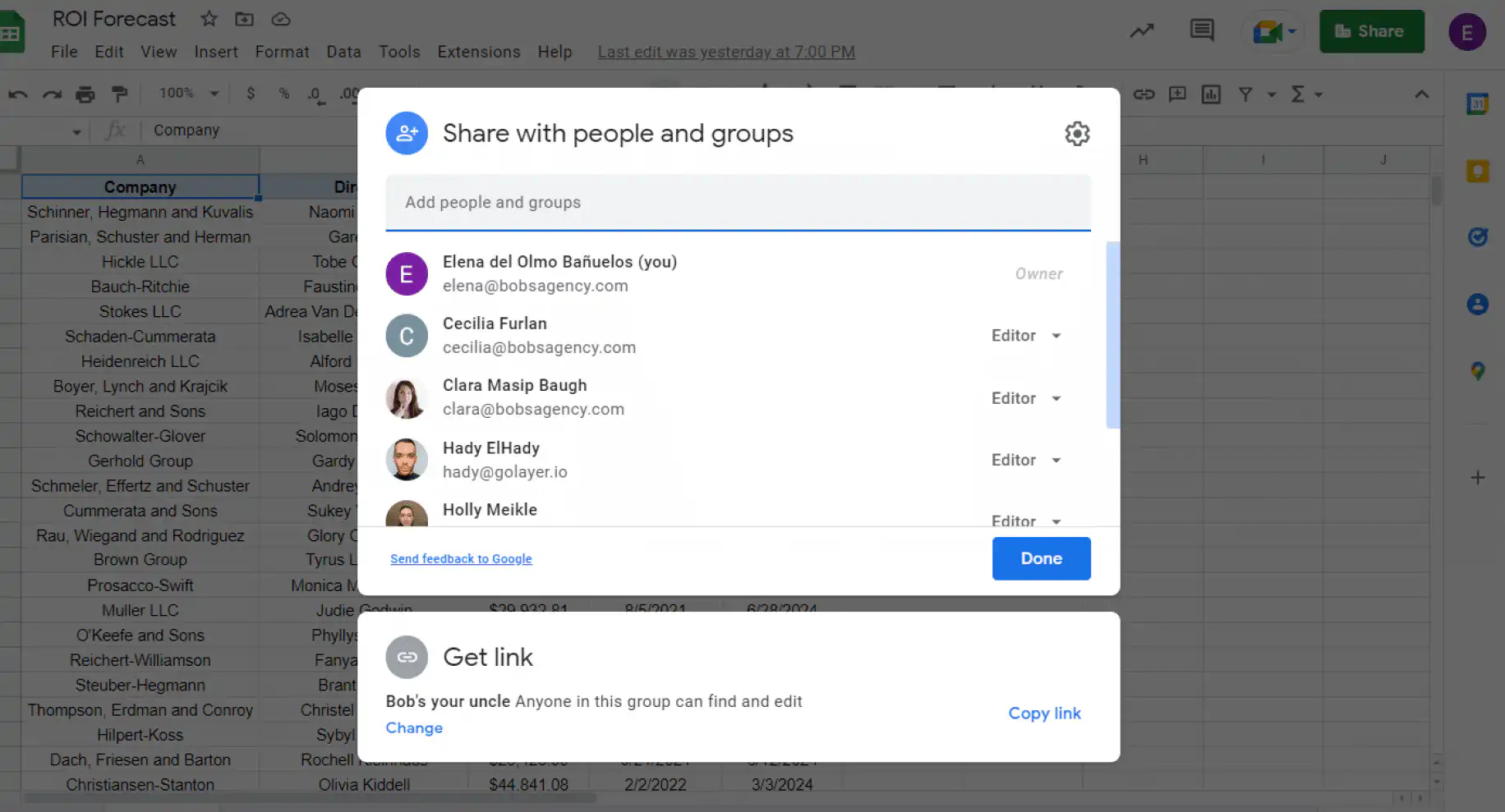
Share a Google Sheet link — sharing dialog with Copy link in the Get link box

Once you have copied the link, you can paste it on any of the communication channels used with your team, whether it’s email or instant messaging. However, for them to be able to access the document, they need a Google account with access to the file, unless you set the link to “Anyone with the link” as shown below.
How to share your Google Sheet by adding the user email?

1. Click on the “Share” button placed in the top-right corner of your Google Sheets.

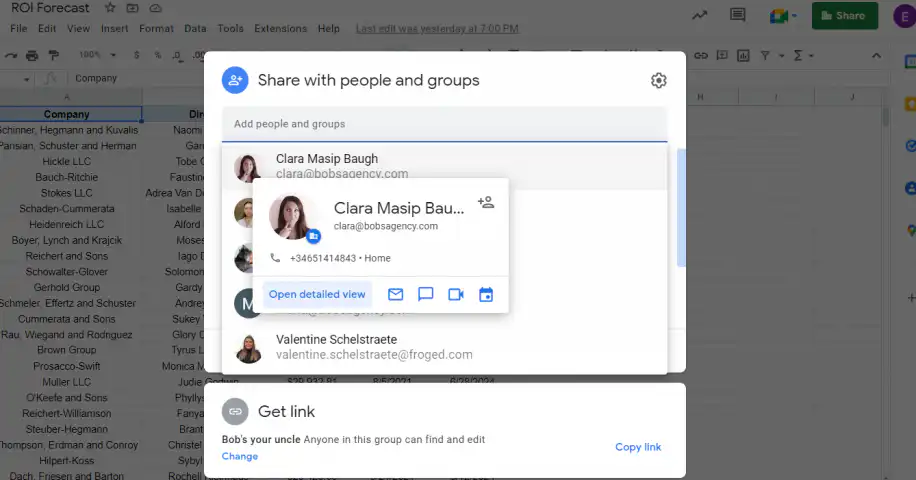
2. In the “Share with people and groups” setting box, click on the “Add people and groups” empty field. Start typing the email address of the user you’d like to share the file with. Click on the user email to add them to your permissions.

Share a Google Sheet by email — Add people and groups field with contact suggestions

3. Leave the “Notify people” box ticked, so they are notified via email about the shared Google Sheets.
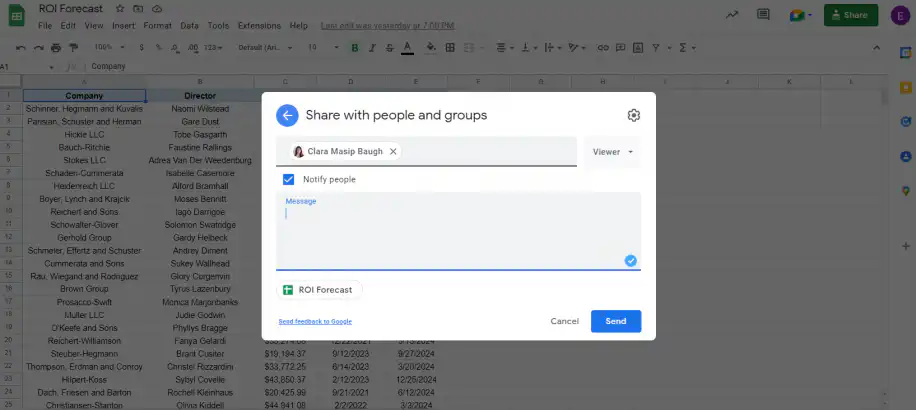
Share a Google Sheet by email — Notify people box checked and the Viewer role

4. Enter a message in the “Message” space in case there is any additional information you’d like to add. Users will receive this message in the email body. Once you’re done, click “Send”.
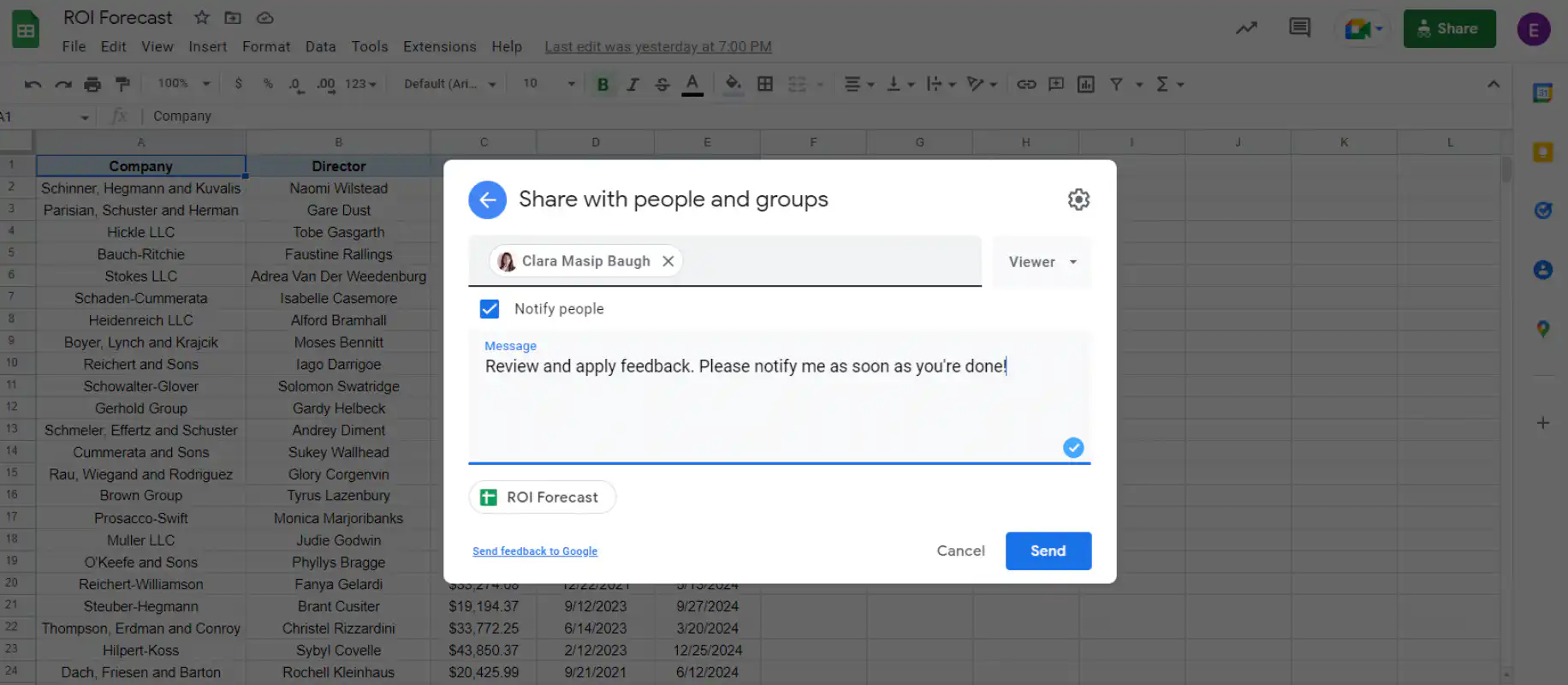
Share a Google Sheet by email — note typed in the Message field above Send

So far, you’ve seen the two ways of sharing a Google Sheet. Let’s now explore how it can be shared to allow for editing.
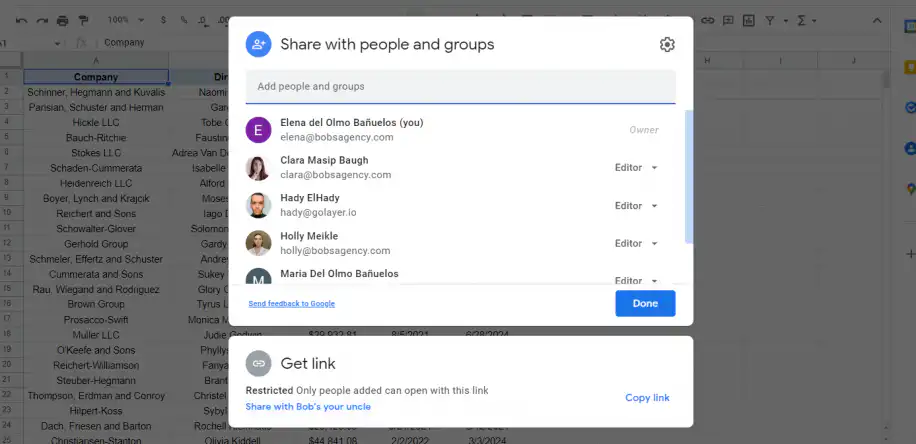
How to share a Google Sheet and allow editing?

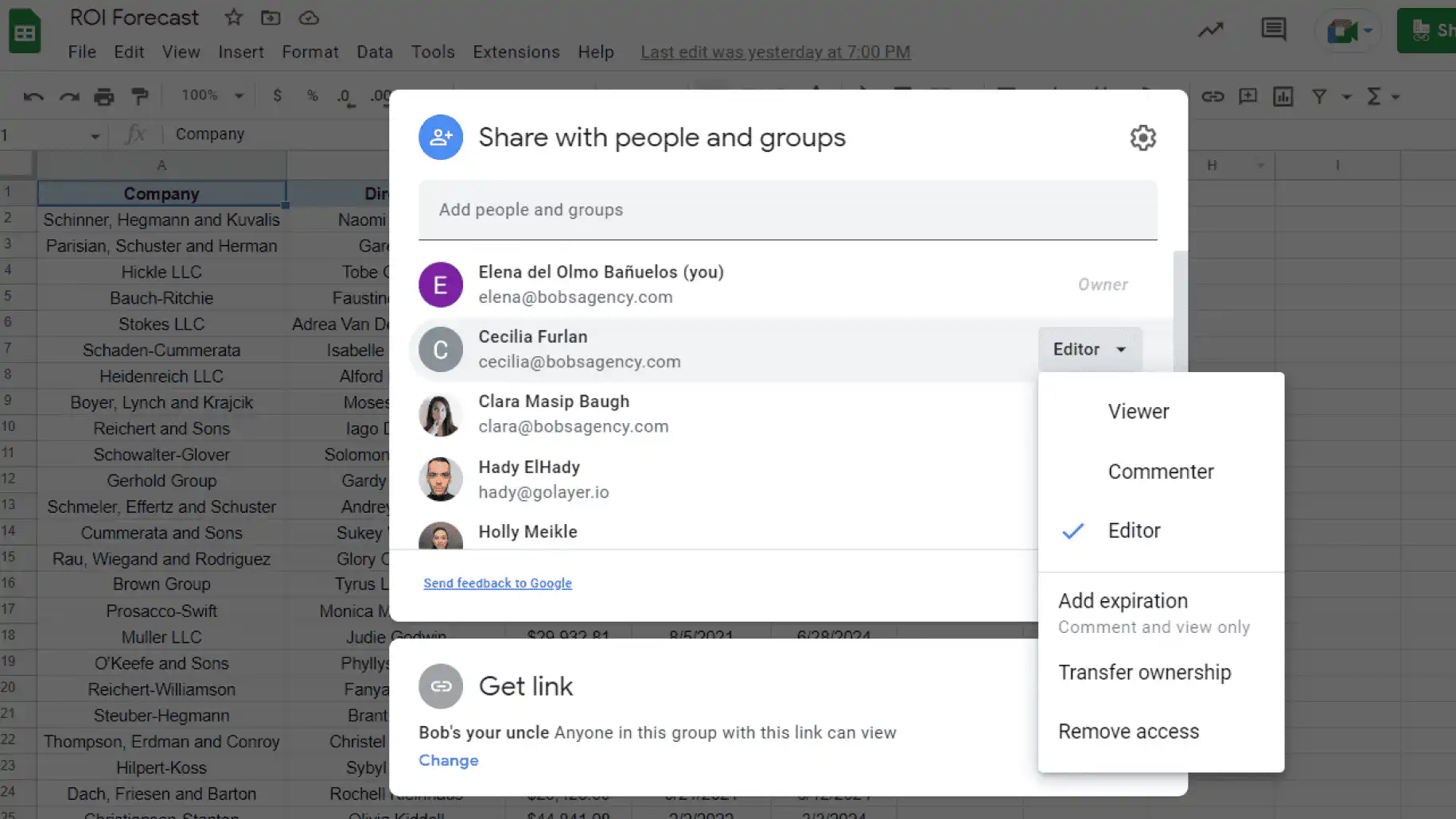
If you want to make your Google Sheets a fully collaborative spreadsheet, then you need to make sure that the shared document is editable. This is how you can share your Google Sheets and allow for editing.

1. Repeat steps 2-3 from How to share your Google Sheet by getting the link.

2. In the “Share with people and groups” setting window, click on the drop-down option next to each user email, then select “Editor” to grant editing rights to each user.

Editors can change any cell. To keep formulas or important ranges safe, protect cells or pages in Google Sheets before you share.

Share a Google Sheet with editing — role menu with Viewer, Commenter and Editor

How to share Google Sheets with everyone?

Note that “everyone” is usually understood as everyone within a group or organization. This sharing option is recommended for teams that have a workspace or shared Google Drive, where any document created in that shared Drive is accessible to everyone. This is how you can share your Google Sheets with everyone in your organization or group.

1. Repeat steps 2-3 from How to share your Google Sheet by getting the link.

2. In the “Get link” settings box click on the hyperlinked text, “Share with [name of your organization or group]”.

Share Google Sheets with everyone — Get link box with a restricted link and a group

3. Google will now prompt you to select among three options: “Restricted”, “[Your organization or group]”, and “Anyone with the link”. Select the “[Your organization or group]” option.
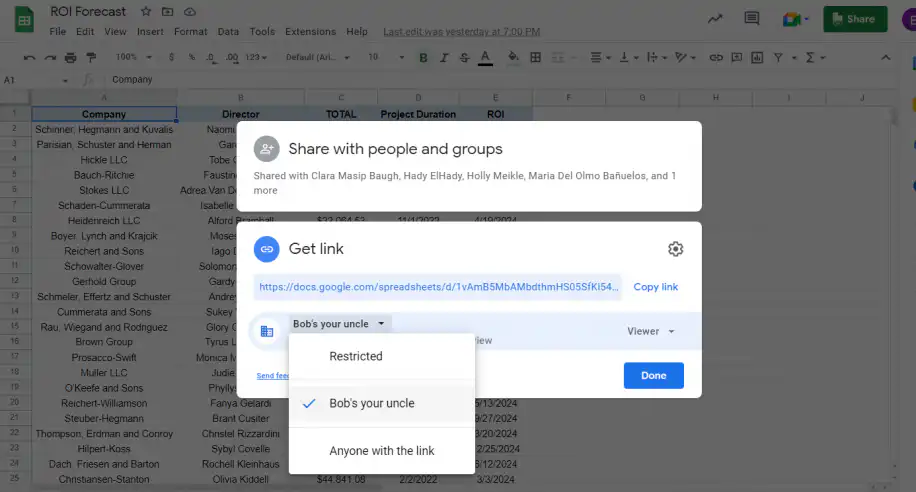
Share Google Sheets with everyone — link menu with Restricted, the group and Anyone with the link

4. At this point, you can change the editing permission for everyone in the organization by clicking on the drop-down menu option. Click on “Editor”.
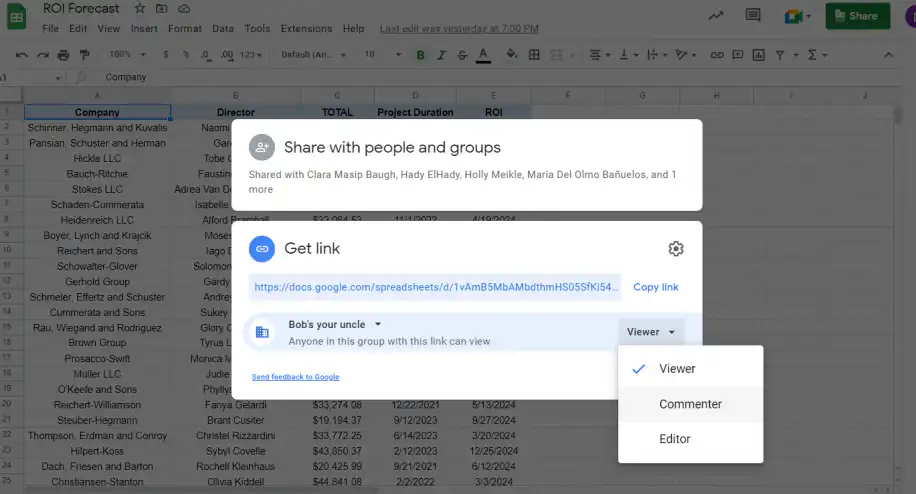
Share Google Sheets with everyone — group link role menu with Viewer, Commenter and Editor

5. Now, everyone in your group can edit. To update the permission, click “Done”.
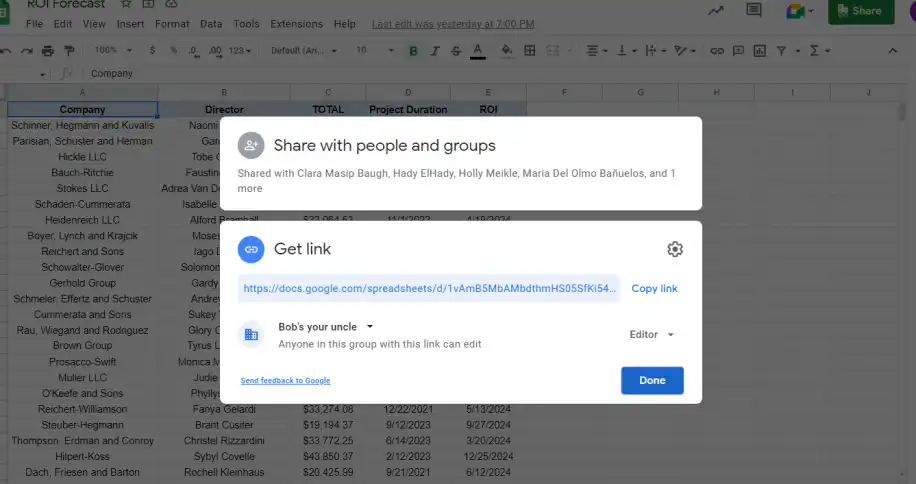
Share Google Sheets with everyone — group link set to Editor next to the Done button

If you’d like to change the permission back to restricted access to specific users, then change the option to “Restricted” in the “Share with people and groups” pop-up window where you added the emails.

How to make a Google Sheet public?

This sharing option is especially recommended in case you would like to make your Google Sheet public for users who don’t have a Google account. However, it’s recommended to set the Google Sheets to view-only or read-only to avoid unwanted changes and maintain data privacy. This is how to make a Google Sheet fully public.

1. Repeat steps 1-2 from the previous section.

2. Select “Anyone with the link” from the drop-down menu.
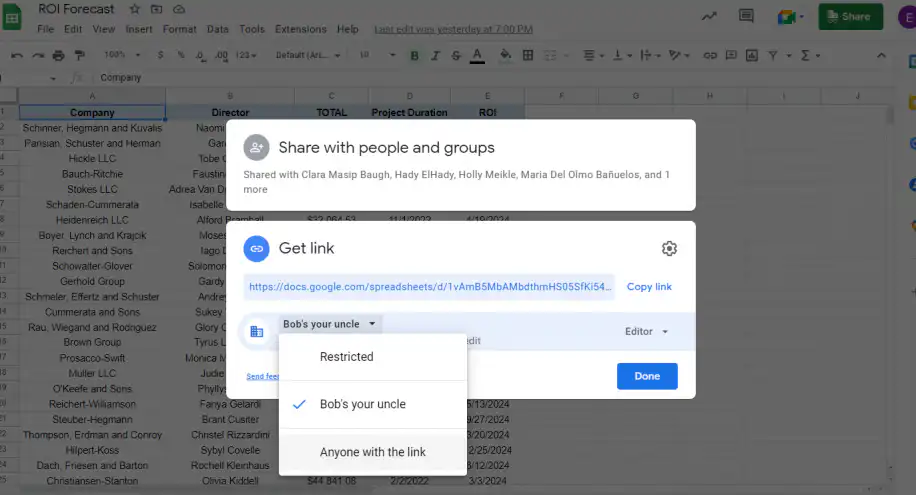
Make a Google Sheet public — link menu with Anyone with the link option

3. Click on the permissions drop-down menu. Google displays the three options “Viewer”, “Commenter”, and “Editor”. Click on “Viewer” to only grant viewing or read-only rights.
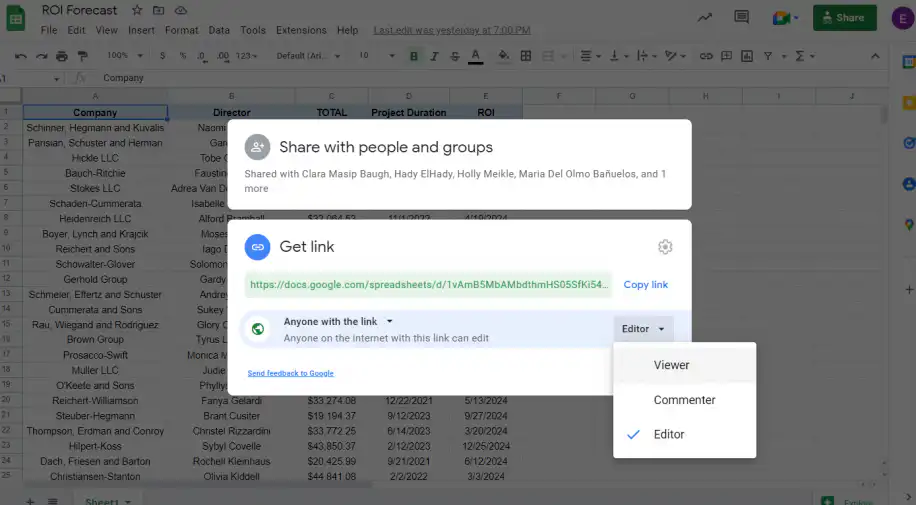
Make a Google Sheet public — Anyone with the link role menu with Viewer, Commenter and Editor

4. Once you finish, click “Done” to update the sharing permissions.
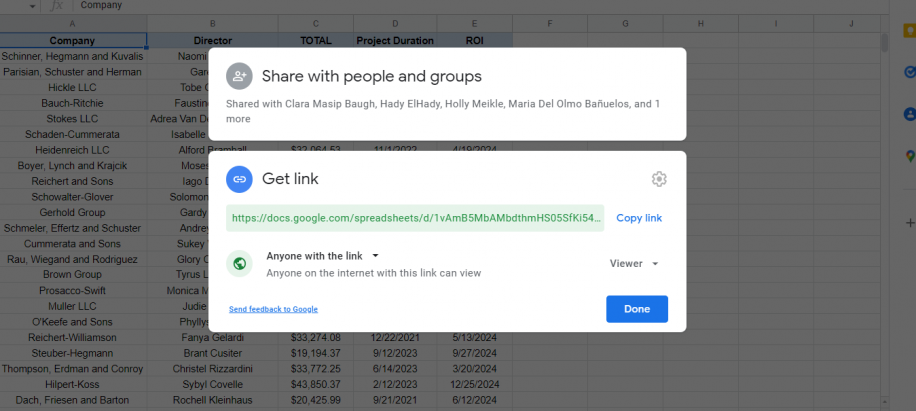
Make a Google Sheet public — Anyone with the link set to Viewer next to Done

How to create a Google Sheet and share it

If you are starting from scratch, you can create the spreadsheet and share it in a few clicks:

  1. Type sheets.new in your browser’s address bar, or open Google Drive and click New, then Google Sheets.
  2. Click “Untitled spreadsheet” in the top-left corner and type a name for the file.
  3. Click the “Share” button in the top-right corner.
  4. Add the email addresses of the people who need access and pick Viewer, Commenter, or Editor for each one. To share a link instead, change “Restricted” under “General access” to “Anyone with the link” and click “Copy link”.
  5. Click “Send” or “Done”.

Name the file before you share it. Otherwise it shows up in people’s inboxes as “Untitled spreadsheet”.

How to find Google Sheets shared with you

Spreadsheets that other people share with you don’t appear in My Drive. To find them:

  1. Open Google Drive and click “Shared with me” in the left menu.
  2. Open the “Type” filter at the top and choose “Spreadsheets” to see only Google Sheets.

You can also go to the Google Sheets home screen at sheets.google.com, open the “Owned by anyone” drop-down, and select “Not owned by me”.

To keep a shared file close at hand, right-click it in “Shared with me” and choose Organize, then Add shortcut, to put a shortcut in My Drive.

Conclusion

Google Sheets provides possibly the fastest and easiest ways to share a file with others. This is precisely why it’s crucial to understand all the options available to optimize collaboration. Unless you don’t mind making your Google Sheets fully public and editable, it’s critical to be aware of what goes on in every step.

You should now know how to share a Google Sheet using any of the options, by getting the link and copying it to your preferred communication channel, or directly adding the users’ email in the Google Sheets sharing options. You have also seen the range of permissions available, from viewing to editing, depending on whether you wish to make the document fully public or restrict it to the email accounts in your organization.

If several teams need the same data, Sheetgo, an AI-powered data automation platform, can send each team only the rows it needs from a master spreadsheet, so you don’t have to share the whole file with everyone. To learn more about Google Sheets and Excel collaboration features, these blog articles will be useful:

You may also like…

google sheets features and formulas

Top 5 dynamic array formulas in Google Sheets 

Google Sheets has evolved beyond basic spreadsheets. With the introduction of dynamic array formulas, users can now manipulate and analyze...
google sheets features and formulas

Mastering the FILTER Formula: 4 Use Cases with Examples

The FILTER formula in Google Sheets is a versatile tool for extracting data that meets specific conditions. Unlike the QUERY formula,...
google sheets features and formulas

Unlocking the Power of SUMIF and SUMIFS in Google Sheets: 4 real-life use cases

The SUMIF and SUMIFS formulas in Google Sheets are indispensable tools for performing conditional summations. They simplify complex...